Global Trade Rearrangement: Strategic Financial Implications for CFOs

The $100B Question: Quantifying a New Era of Supply Chain Risk
The era of predictable, globalized supply chains is over. We are now in a 'great trade rearrangement' where geopolitical strategy directly impacts financial stability. Analysis shows that a partial rearrangement of global exports for key products could create an import shortfall of over $100 billion for the U.S. alone, leaving a massive surplus on the world market.
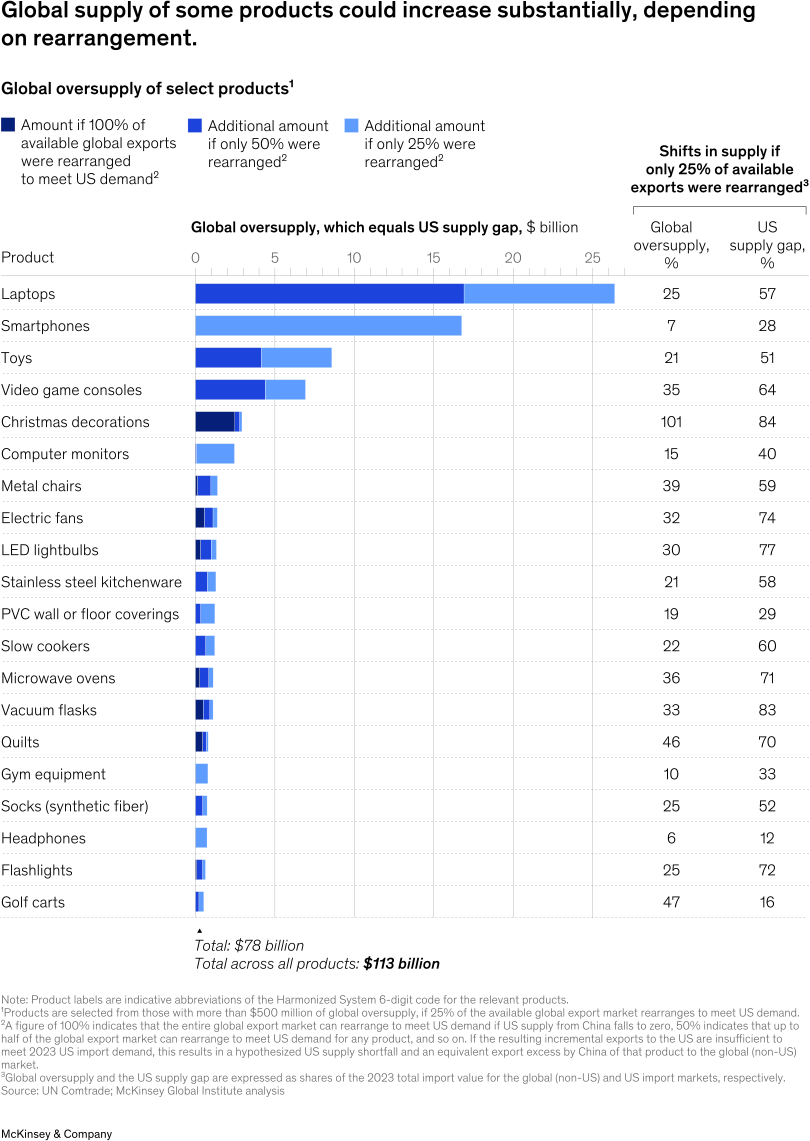
The chart underscores the potential implications of the shifting trade terrain on your organization's financial health.
From Reactive Reporting to Proactive Strategy: A CFO's Playbook
Given these alarming insights, how can the strategic CFO navigate the uncertainty? A three-step plan is required. Firstly, stress-test your financial models. Run scenarios modeling the impact of a 10%, 25%, and 50% disruption in key import categories on COGS, revenue, and cash flow. Secondly, diversify financial instruments, not just suppliers. Evaluate the use of forward contracts, currency hedging, and trade credit insurance to buffer against price and supply volatility. Lastly, re-evaluate working capital assumptions. Longer lead times and supply uncertainty will tie up cash. Re-model your cash conversion cycle to understand the true cost of holding more inventory or facing production delays.
The Technology Mandate: Leveraging AI for Financial Foresight
Such a complex challenge demands a technology solution. Embrace AI-powered scenario planning, beyond static spreadsheet. Leverage AI to run thousands of simulations based on real-time geopolitical and market data to give a dynamic view of financial outcomes. AI's predictive analytics can monitor macroeconomic indicators, shipping costs, and commodity prices to provide early warnings on cost volatility. Automating routine financial operations frees your team's time for strategic challenges.
Conclusion: The CFO as the Chief Resilience Officer
Navigating the great trade rearrangement is the strategic CFO's mandate. It requires moving from financial controller to Chief Resilience Officer, embedding foresight and agility into your company's DNA.


