Strategic Finance Leadership: Unleashing Generative AI's Economic Potential for CEOs

Are you making strategic decisions based on a three-week-old financial report? For too many growth-focused CEOs, this guesswork is a frustrating reality. While the market buzzes with the potential of Generative AI, its most critical application isn't a futuristic concept—it's the immediate opportunity to transform your finance function from a rearview-mirror cost center into a predictive engine for scalable, profitable growth. This isn't a technology trend; it's a strategic inflection point that demands CEO-level attention.
The Multi-Trillion Dollar Question: Why Generative AI is a CEO-Level Imperative
To lead effectively in this new era, we must move beyond the hype. Generative AI is not a technical tool to be delegated to the IT department; it is a catalyst for creating tangible economic value and securing a decisive competitive edge. The scale of this opportunity is staggering, with analysis from McKinsey estimating its potential economic contribution in the trillions of dollars across key global industries. This is not an incremental improvement. It represents a fundamental shift in how value is created, making its adoption a boardroom-ready imperative for any organization serious about future-proofing its operations and market position.
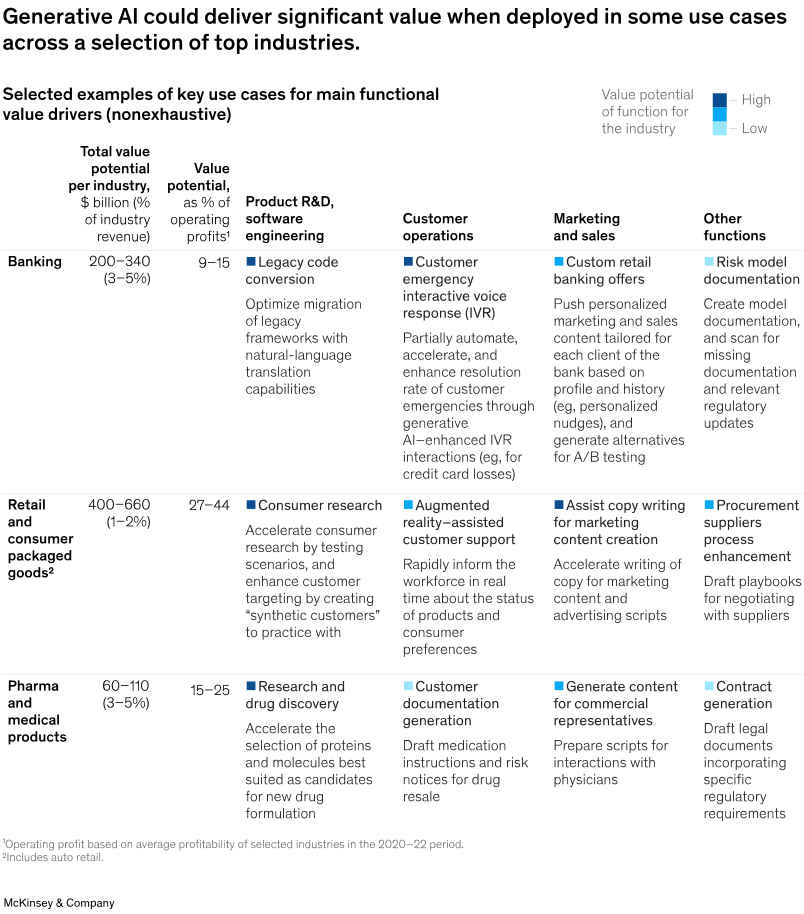
The data is clear: the potential for value creation is immense, but it will not be distributed evenly. Competitors in every sector—from banking to high tech—are already modeling the EBIT impact of deploying AI in core functions. For a CEO, the implication is stark: the risk is not in adoption, but in inaction. Delay allows competitors to build more efficient, predictive, and resilient operational models, creating a strategic gap that will become increasingly difficult to close.
From Bottleneck to Growth Engine: Transforming Your Finance Function
For decades, the finance function has operated on a historical basis. Manual data entry, cumbersome reconciliation processes, and multi-week closing cycles result in delayed reports that offer a picture of where the business was, not where it is going. This operational drag is a direct bottleneck to scale, forcing leadership to rely on outdated information for critical decisions about capital allocation, resource planning, and market expansion.
Generative AI facilitates a crucial workflow redesign. By automating routine tasks with precision and embedding compliance guardrails directly into the process, it liberates your finance team from manual drudgery. This transformation is not merely about efficiency; it’s about elevating your financial talent into proactive, strategic partners. Instead of spending their time compiling data, they can focus on analyzing it, providing the forward-looking insights needed to model scenarios, identify opportunities, and mitigate risks. The result is the ability to achieve scalable growth without the traditional, proportional increase in SG&A costs—a key objective for any growth-oriented enterprise.
The CEO's Playbook: Three Steps to Capitalize on the AI Revolution
Seizing this opportunity requires decisive leadership, not a deep understanding of algorithms. Here is a pragmatic framework for action:
- Step 1: Redefine the Mandate for Your CFO. The first move is to shift the CFO’s role from financial gatekeeper to strategic growth architect. Task them with creating an action plan that identifies high-impact AI use cases tied directly to core business objectives. Their new mandate is to deliver not just accurate reports, but a quantifiable ROI timeline for technology adoption.
- Step 2: Prioritize a 'Single Source of Truth'. AI-driven insights are only as reliable as the data they are built on. Many executive teams are hindered by fragmented data silos that prevent a trusted, real-time view of cash flow and profitability. Champion the initiative to create a clean, integrated data foundation. This is the critical infrastructure for building a truly predictive financial engine.
- Step 3: Champion a Culture of Experimentation. Full-scale transformation can seem daunting. Reframe AI adoption as a series of strategic, ROI-driven pilot projects. The finance department is the ideal place to start, as successful workflow redesign here can produce measurable value creation in 30-90 days. These early wins build momentum and provide a clear business case for broader implementation.
Your Legacy: Leading a Future-Proof Enterprise
Integrating Generative AI into your financial core is not an IT project; it is a fundamental leadership decision about how your company will compete and grow for the next decade. It’s about building an organization with the agility to respond to market shifts, the intelligence to anticipate customer needs, and the scalability to seize new opportunities without being constrained by outdated processes.
The ultimate call to action is to turn to your finance leader and ask not 'if' they are exploring AI, but 'how' and 'when' they will begin harnessing its power. The legacy you build will be determined by your foresight to architect a more agile, intelligent, and scalable enterprise today.


