Gen AI's Strategic Workforce Shift: Optimizing for Growth

As a CEO, your task is growth, yet legacy back-office operations present a drag that turns strategic decision-making into guesswork. The conversation around Generative AI (Gen AI) often focuses on cost-cutting, which dangerously conceals the real opportunity: the strategic reallocation of your talent from manual tasks to innovation. This pivot isn't just about efficiency; it's about architecting a truly scalable operating model to foster future growth.
The New Growth Bottleneck: When Operations Undermine Strategy
- The High Cost of Slow Data: In today's aggressive market, awaiting month-end reports to make decisions is a strategic misstep. Slow financial data directly undermines nimble strategy.
- Hidden Risks in Manual Processes: Inefficient processes are directly tied to your immediate concerns about compliance and reputational risk. Manual work not only slows things down but also invites errors and potential failures.
- The Talent Drain: Allowing highly skilled finance and operations staff to waste time on manual data entry is a vast underutilization of talent that could otherwise be applied to strategic analysis and forward-looking projects.
Gen AI's Real Impact: A Strategic Shift, Not Just Headcount Reduction
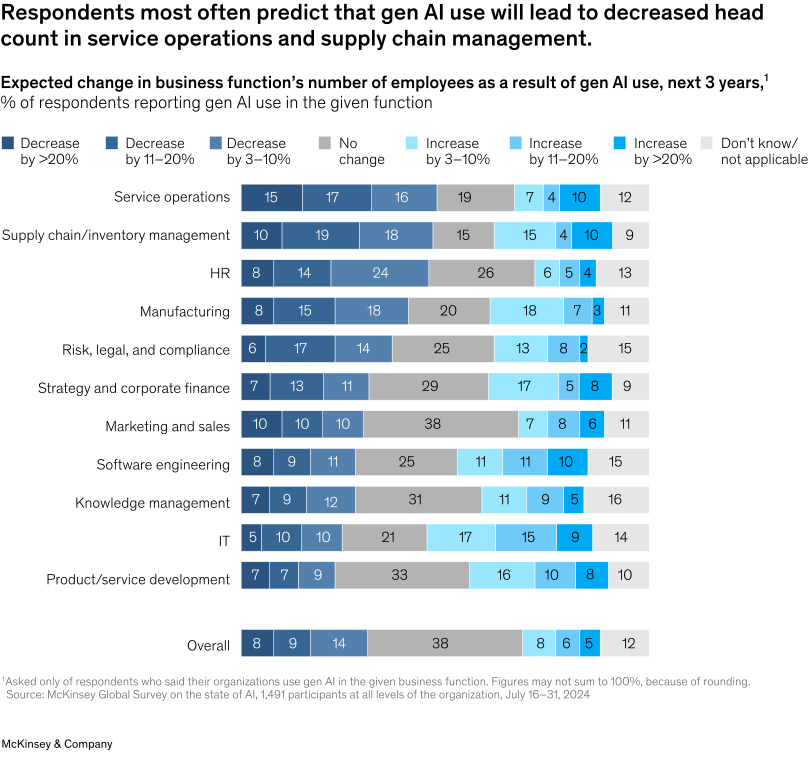
- Beyond the Automation Hype: Mainstream misconceptions place AI's primary role as eliminating jobs in functions such as finance and operations.
- Data Reveals a Deeper Strategy: Introduce the nuanced reality: enlightened companies aren't just cutting costs; they're reallocating resources to where they matter most.
- The Reinvestment Engine: Analyze the exhibit's implication for a CEO. The decrease in operational headcount isn't the story; it's the funding mechanism for increasing headcount in growth-driving functions like R&D, product development, and IT.
The CEO's Blueprint for a Scalable Operating Model
- Step 1: Automate to Accelerate: Automating repetitive, low-value tasks forms the foundation of this blueprint. Energizing your team to focus on high-impact analysis and strategy, transforms the finance function from a cost center to a strategic partner.
- Step 2: Reinvest Savings in Innovation: Frame the ROI of automation in terms of freed-up capital and talent. Show a clear line from reducing back-office overhead to funding the next product feature or market expansion.
- Step 3: Mandate a Single Source of Truth: The strategic shift posited here is only possible with a unified data platform that delivers reliable, on-demand insights into cash flow and profitability, enabling confident decision-making.
Conclusion: Leading the Shift from Overhead to Advantage
- Your New Competitive Edge: Summarize the core argument: Gen AI's true power lies in converting operational efficiency into strategic advantage.
- A Leadership Mandate: End with a call to action. The challenge for modern CEOs is not if Gen AI should be adopted, but how to lead a strategic reallocation of resources to build a more resilient, innovative, and scalable organization.


