The CEO's Playbook: Driving Scalable Growth Through High-Performing Executive Teams

Your executive team is perfectly aligned. Everyone's committed to the same goals and pulling in the same direction. So why does it feel like you're navigating the future by looking in the rearview mirror? The answer lies in a hidden bottleneck that even the most cohesive teams create, and it's not found in your financial reports.
The Great Alignment Paradox: Why Unity Can Mask Stagnation
- As CEO, you’ve worked tirelessly to get your executive team aligned on vision, purpose, and goals. This unity is a hard-won and essential asset. It is the foundation upon which predictable execution is built, a prerequisite for any stable operation.
- But what if this strength has a hidden downside? When alignment isn’t balanced with dynamic renewal, it creates an echo chamber where new ideas are stifled, and critical challenges go unspoken, directly bottlenecking your ability to scale. This is the strategic inflection point where comfortable consensus becomes a liability.
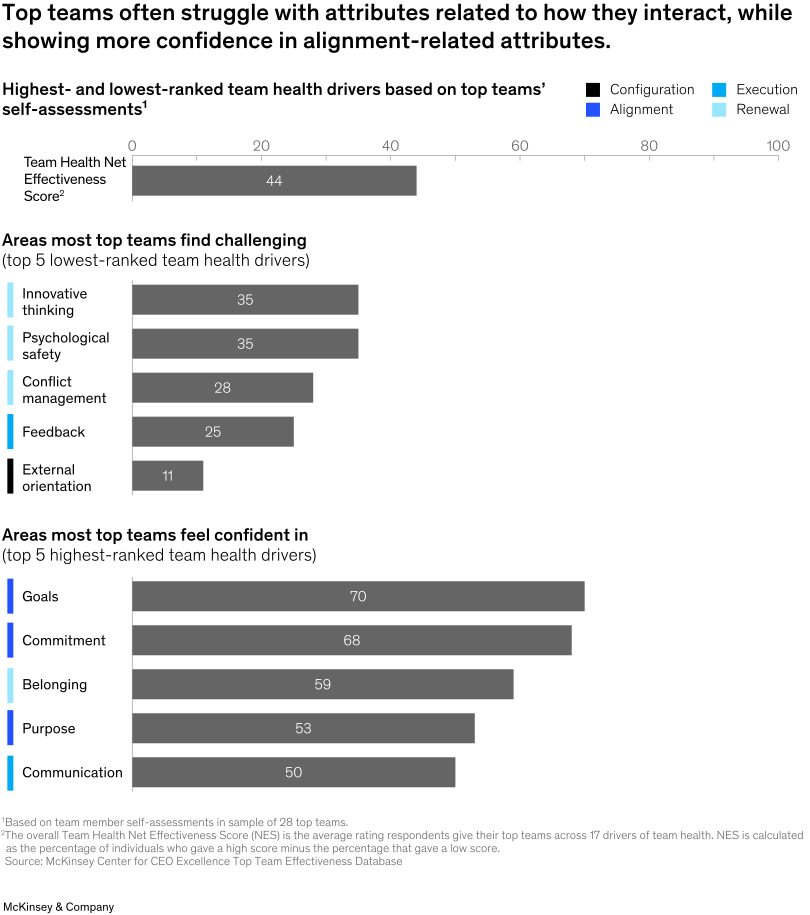
- Recent data from the McKinsey Center for CEO Excellence provides a stark, boardroom-ready visualization of this challenge. While most leadership teams report high performance on alignment metrics like commitment and goals, they consistently fail on the drivers of renewal—the very behaviors that fuel future growth.
Diagnosing the Renewal Deficit in Your Leadership Team
- The exhibit reveals a critical disconnect. The biggest challenges for executive teams are not in agreeing on what to do, but in how they interact: fostering psychological safety, managing conflict, and giving candid feedback. The machine is aligned, but it has no mechanism for self-improvement or reinvention.
- This "renewal deficit" is the root cause of slow, guesswork-based decisions. A lack of healthy debate means strategies aren’t pressure-tested, creating unmitigated risk. A fear of conflict keeps innovative, disruptive ideas on the sidelines, ceding ground to more agile competitors. This has a direct EBIT impact through missed opportunities and the escalating cost of maintaining an outdated operational model.
- Ultimately, a team that can't challenge itself cannot innovate. This turns your leadership team—the engine of your growth—into a bottleneck that preserves the status quo instead of driving scalable progress. The team becomes optimized for yesterday's business model, not tomorrow's market reality.
The CEO’s Prescription: 3 Steps to Cultivate a High-Renewal Executive Team
- To build a team that can scale, you must intentionally shift the dynamic from comfortable alignment to productive friction. This isn’t about harmony; it’s about high-caliber thinking and rigorous decision-making. The goal is to design a workflow for strategy itself.
- Mandate Productive Conflict: Reframe debate as a critical component of the strategic process. Explicitly ask for dissenting opinions in every strategic meeting and reward team members who pressure-test assumptions—even if the final decision remains the same. This makes intellectual rigor a core team value.
- Install a Feedback Operating System: Move beyond ad-hoc feedback and implement a structured, non-negotiable process for peer-to-peer evaluation at the executive level. The focus must be on behaviors that impact team renewal, such as challenging assumptions or surfacing difficult truths. This provides the compliance guardrails for continuous improvement.
- Measure and Reward Innovative Thinking: Make renewal a performance metric. Tie a portion of executive incentives to experimenting with new approaches or killing legacy processes. This shifts the focus from merely hitting targets to architecting better ways to achieve them, fostering measurable value creation.


