Why Larger Firms Lead in Gen AI Adoption: A CEO's Guide to Strategic Scaling

In the race for market dominance, one may consider Generative Artificial Intelligence (AI) as a pivotal asset. However, for growth-oriented CEOs, AI is more than an advanced tool—it’s a strategic determinant for a firm's market position. Understandably, this places a significant focus on the speed and efficiency of AI adoption.
The emerging competitive landscape is not separated by those who have AI and those who don’t. Instead, it has created a divide based on the efficient strategic adoption of this technology. While large incumbent firms lead, smaller, growth-oriented firms are trying to keep the pace.
The Great Divide: Why Large Enterprises Are Pulling Ahead in AI
One would assume that the widened gap between large and smaller firms is due to the disparity in budget size. Contrary to this belief, the distinctive gap results from the strategic process of AI adoption.
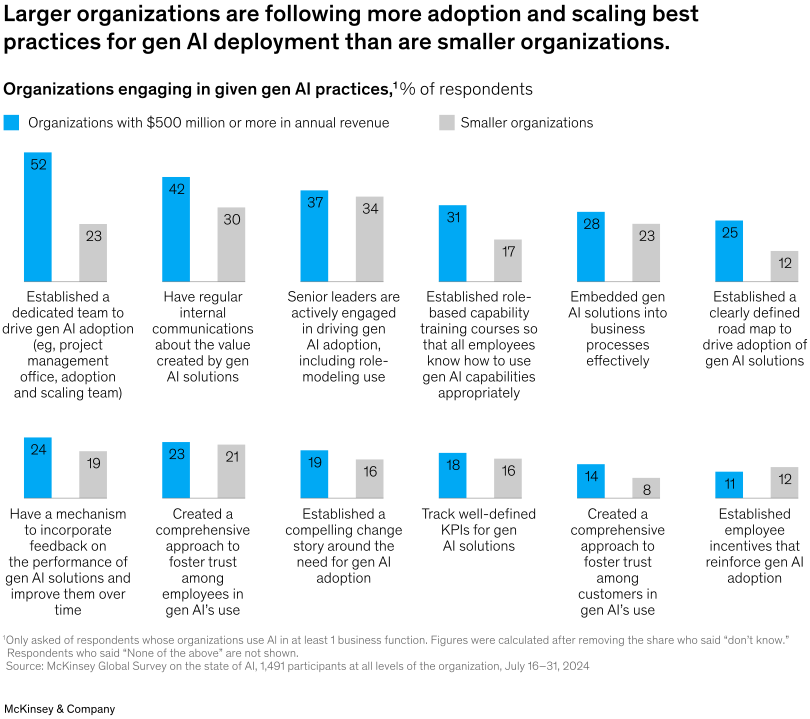
McKinsey's report on the state of AI mirrors this reality by illuminating the strategic practices that widen the gap between large enterprises and smaller firms.
Deconstructing the Enterprise Playbook: What Your Larger Rivals Do Differently
Our analysis revealed that successful AI implementation requires more than a roadmap and a dedicated team. The data points to strategic principles that include clear communication and decisive action, resulting in more scalable growth and an empowered organization.
This strategic adoption creates a competitive moat around larger competitors, increasing the urgency for growth-oriented firms to act.
A CEO’s Playbook for Strategic AI Scaling
Strategic AI adoption starts by targeting a specific pain point, such as financial reporting delays, to ensure a quick, visible win. This strategy provides a foundation for future growth.
Establishing a cross-functional 'AI Task Force' is a lean, practical alternative to a massive dedicated office, which can be impractical for a growing company. The key is to measure success in terms of profitability, cash flow, and decision speed, not just successful AI implementation.
Conclusion: Your Next Move Decides Your Market Position
Without a doubt, closing the AI adoption gap is essential for scalable growth and competitive survival. The goal isn't to mimic large enterprises but to take these principles and design an agile strategy. This approach, centered around strategic AI adoption, will pave the way for your company's next phase of growth.


