Architecting the Agentic Enterprise: A CEO's Guide to AI-Driven Competitive Advantage

Your financial reports tell you where the business was. In a market defined by volatility, your strategic decisions must be based on where it is and, more critically, where it’s going. The lag between operational action and executive insight is your single greatest unmeasured risk. The agentic enterprise, an organization built with an intelligent AI core, closes that gap for good.
From Reactive Reporting to Proactive Strategy
For decades, the rhythm of leadership has been dictated by the reporting cycle. Monthly and quarterly reports provide a rearview mirror perspective—a necessary tool for governance but a fundamentally flawed instrument for navigating the future. In today's economy, this 'cost of delay' is no longer a minor inconvenience; it's a direct threat to competitive advantage. Waiting for manually compiled data means opportunities are missed and risks are identified too late, creating a drag on performance and EBIT impact.
This is the strategic inflection point where the agentic enterprise emerges as a new operational paradigm. It’s a model where AI doesn't just automate isolated tasks but creates a real-time, intelligent backbone for the entire organization. This shift moves a company from a state of reacting to historical data to one of proactively shaping outcomes based on live intelligence.
The CEO's New Cockpit: Architecting an Intelligent Core
Transitioning to an agentic model is not an abstract technological pursuit; it's an architectural one. It requires a clear blueprint that redefines how work, data, and strategy interconnect, moving beyond fragmented automation to a holistic workflow redesign. This framework provides the structure for embedding intelligence directly into your core processes.
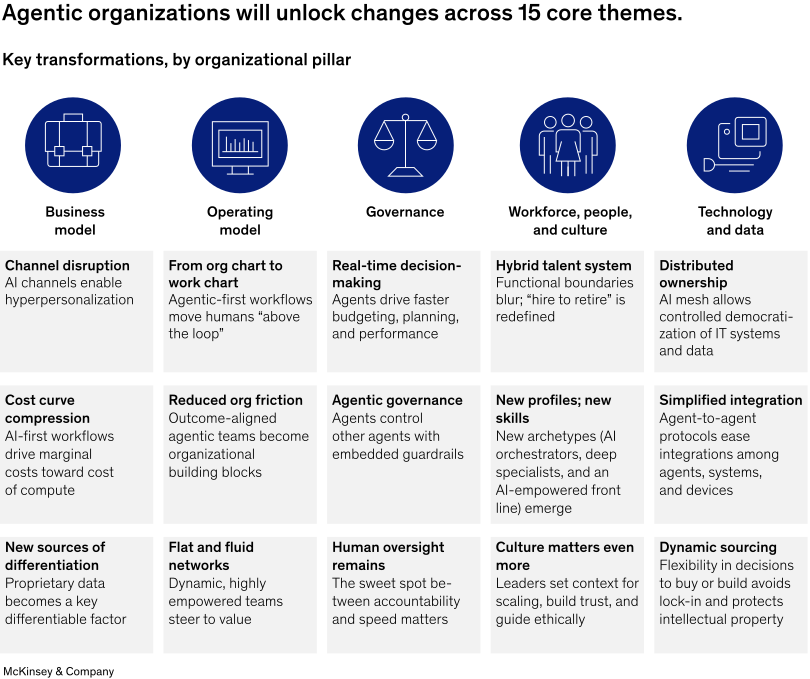
The themes detailed in the McKinsey framework offer a boardroom-ready action plan. Core elements like an 'AI-powered core' and a 'data-rich tech backbone' directly address the CEO’s most persistent pain points: the lack of a clear, real-time view of cash flow and enterprise-wide profitability. When your operational and financial data flows through an intelligent core, you eliminate the blind spots created by manual reconciliation and siloed systems.
This model fundamentally transforms the finance function. It empowers the team to move beyond the role of historical scorekeeper and become a proactive partner in growth. With compliance guardrails built into the system and data integrity assured, your finance leaders are freed to deliver the forward-looking insights that drive measurable value creation and secure a durable strategic edge.
Your First Step: From Blueprint to Action
The path to an agentic enterprise does not require a high-risk, 'big bang' overhaul. The most pragmatic approach begins with identifying the single greatest strategic bottleneck caused by slow, manual processes. Is it the cash conversion cycle? Is it the delay in profitability analysis for a new product line? Pinpoint the area where improved decision velocity would have the most significant EBIT impact.
From there, empower a specific team—most often Finance—to pilot an agentic solution. Frame this not as a technology experiment, but as a focused strategic initiative to enhance decision-making. The objective is to prove that by rewiring a critical workflow, you can generate more reliable data, faster. The key metric for success isn't just efficiency gain, but the quantifiable improvement in strategic agility and the board’s confidence in its decisions.


